RBAW Monthly Newsletter
- July 2026 -
|
|
|
|
|
Summer has arrived on Lake Union - Share our Safety Message! |
|
|
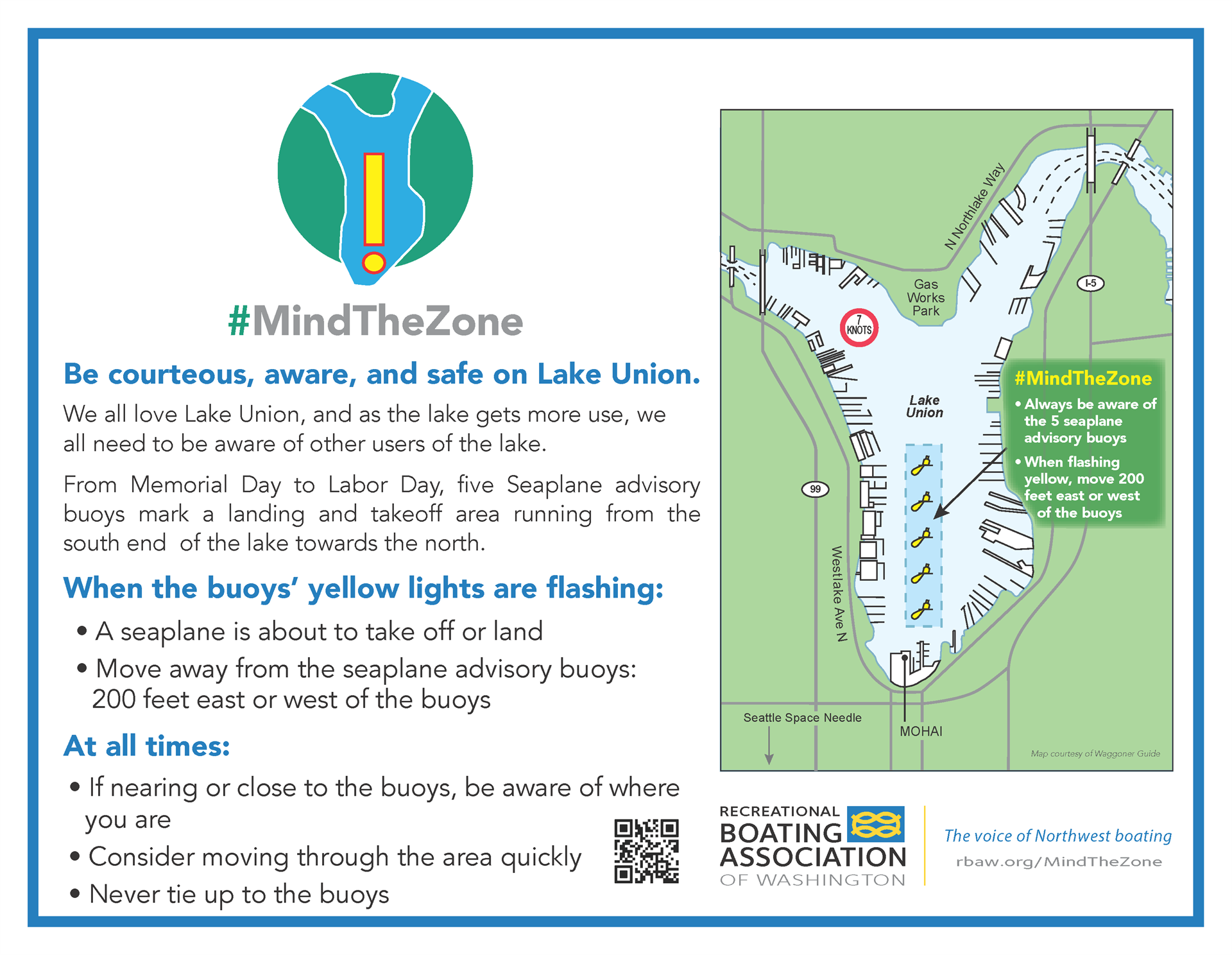
Summer is in full effect on Lake Union—yes, the joke that “summer in Seattle starts July 5th” has held mostly true again! The Mind The Zone Campaign has been running at full speed, including during the few weeks of World Cup games and international visitors that just wrapped up. Mind The Zone’s ongoing partnership with the local businesses that rent paddleboards, kayaks, electric boats--even floating hot tubs--is continuing to educate lake users on how to be aware, courteous, and safe on the lake.
Our two outreach coordinators this summer have been canvassing the popular put-in spots, and have already talked directly to hundreds of recreationalists, and have handed out hundreds of Mind The Zone sunscreens. Safety first—in boating and in skin protection! Mid-July through Labor Day when temperatures stay high is the most-busy period of lake use, so please share the campaign message at RBAW.org/mindthezone with anyone who know who may be recreating in the area.
And, if you are in the downtown Seattle area, look for the campaign advertising on the electric trolleys: buses with the two electric booms connecting to the overhead wires. Many have our twelve-foot-long advertisement on their sides. Our simple fifteen second video is now up to a total of 3.7 million YouTube views over the campaign’s five-year history.
For RBAW, not only is this campaign a proactive way to ensure a shared resource (Lake Union) stays shared and available to all, as it has for over 100 years, this campaign introduces a new audience of generally younger water enthusiasts to RBAW’s work in a way they can easily and directly understand. Thanks to the State of Washington and the City of Seattle for this summer’s funding, and maybe we will see you on or around the lake! |
|
|
FREE Mobile Pumpouts in West Puget Sound |
|
|
|
|
RBAW Annual Meeting - November 21st, 2026 |
|
|
Princess Louisa Marine Park |
|
|
*UPDATE - As of 7/15, the navigation hazard has been removed/repaired.
Boaters planning a trip to Princess Louisa Inlet should be aware of a navigation hazard at Chatterbox Falls Dock. The Princess Louisa International Society is advising boaters to use extra caution due to unmarked submerged anchor lines along the inside (east) side of the dock that could foul propellers or damage vessels, particularly at lower tides. |
|
|
Duwamish Waterway East Deviation – What Boaters Need to Know |
|
|
The U.S. Coast Guard has approved a temporary bridge operating deviation for the First Avenue South Bridge over the Duwamish Waterway to allow WSDOT crews to perform critical maintenance and repairs.
Effective: July 7, 2026 – January 8, 2027
During this period:
- The bridge will NOT open from 6:00 p.m. to 6:00 a.m. daily while maintenance is underway.
- During normal daytime hours, the bridge will continue to operate under its regular opening schedule.
- There is no alternate water route around the bridge, so vessels requiring an opening should plan their trips during daytime operating hours.
- The bridge provides approximately 32 feet of vertical clearance over the center span (22 feet at the side spans) when closed, allowing many smaller recreational boats to pass without an opening depending on tide and air draft.
For more information contact Garrett Hutton at (206) 440-4626 or garrett.hutton@wsdot.wa.gov.
|
|
|
|
|
Summer Dungeness Crab Season Opens |
|
|
July marks the return of one of Puget Sound's favorite traditions—summer crabbing! Before dropping your pots, double-check your Marine Area's open days, daily limits, and reporting requirements. Also remember that Washington now prohibits setting crab or shrimp gear from vessels near certain WSDOT-managed ferry terminals and bridges. Review current regulations before heading out.
|
|
|
|
|
|
|
Seafair Boating Restrictions Coming Soon
|
|
|
Planning a late-July cruise through Lake Washington? During Seafair weekend (July 30–August 2), special navigation rules will be in effect. Boats transiting regulated areas must operate at minimum wake (7 mph or less unless necessary for steerage), and temporary closures may affect popular routes. Plan extra travel time and monitor VHF radio broadcasts for updates.
|
|
|
|
|
Cruising Tip: Marina Reservations Fill Fast
|
|
|
July is peak cruising season throughout the San Juan Islands and central Puget Sound. If you're planning overnight stops, reserve marina slips early whenever possible and have a backup destination in mind. Mid-week arrivals often provide the best chance of finding space, especially at the busiest ports. Many marinas can be found on the Dock WA site below.
|
|
|
|
|
|
|
Columbia River & Inland Waters: Beat the Heat
|
|
|
Warm weather brings heavy boat traffic across the Columbia River, Lake Chelan, Lake Roosevelt, and other inland waters. Expect busy launch ramps, afternoon winds, and rapidly changing conditions. Launch early, stay hydrated, and monitor local weather before heading out.
|
|
|
|
|
|
|
|
|
Summer brings excellent whale watching—but remember to give Southern Resident killer whales plenty of room. Stay well outside required approach distances, avoid positioning your boat in the whales' path, and keep speeds low around marine mammals. Responsible viewing helps protect one of Washington's most iconic species.
|
|
|
|
|
|
|
New Canadian SRKW Rules – 1000 Meter Distance Required
|
|
|
Now in effect, as of June 1, 2026, Canada has a 1000-meter (just under 1100 yards) distance rule for SRKWs. “Vessels must stay 1,000 meters away from Southern Resident killer whales in southern BC coastal waters between Campbell River and just north of Ucluelet until May 31, 2027.” This new rule replaces the 400-meter rule in these waters that applied to all killer whales, not just SRKW.
The Be Whale Wise site has the complete new set of rules for Canadian waters, although as of this writing they have NOT yet updated their infographic.
|
|
|
|
|
In Washington Waters, the 1000 yd Distance Rule for Southern Resident Killer Whales (SRKW) Remains in Effect. The rules for SRKW (and other marine mammals) remain the same in Washington waters for 2026. As a reminder, boaters must: - Stay 1,000 yards from Southern Resident killer whales.
- Go slow (<7 knots) within ½ mile of Southern Resident killer whales and move away perpendicular to their path if safe to do so.
- Disengage engine(s) if Southern Resident killer whales appear within 400 yards, if safe to do so.
- Stay 200 yards from Bigg’s/Transient killer whales
- Not park in the path within 400 yards of Bigg’s/Transient killer whales
- Stay 200 yards from baleen whales resting or with a calf.
- Stay 100 yards from all other marine mammals (e.g. humpback whales, gray whales, sea lions and seals)
The Washington regulations recognize that there are some areas in Washington waters where navigable channels are narrower than 1,000 yards. If you encounter Southern Resident killer whales and you're between ½ mile and 400 yards away, you should motor slowly (under 7 knots) away and out of their path of travel, if it is safe to do so. If you are closer than 400 yards, you must disengage your engine(s) and wait for the whales to pass if it is safe to do so.
|
|
|
|
|
|
What is eelgrass?
Eelgrass is a type of seagrass that forms dense underwater meadows, providing habitat for a variety of marine life like Dungeness crabs, salmon, and herring. | |
|
|
Why anchor out of eelgrass?
Anchoring is eelgrass can be risky for boaters because anchors do not hold well in the soft sand and mud where eelgrass grows. Instead of staying put, boats anchored in eelgrass are more likely to drift.
Anchoring in eelgrass can damage the fragile habitat. Boat anchors, chains, and lines can leave scars, creating bare patches that can accumulate over time. These bare patches disrupt the habitat, impacting marine life and potentially leading to erosion.
Voluntary no-anchor zones:
These zones are areas where anchoring is discouraged to protect eelgrass beds. They are marked by informational buoys, navigation apps, and onshore signs.
Best practices for anchoring near eelgrass:
Boaters can help these sensitive eelgrass beds thrive by anchoring in at least 25 feet (8 meters) of water at low tide to avoid the deepest edge of eelgrass meadows. If possible, use a mooring buoy. |
|
|
|
|
RBAW Executive Committee Meeting
July 27th, 2026 | 4:00 PM - via Zoom RBAW Executive Committee Meeting
August 24th, 2026 | 4:00 PM - via Zoom
RBAW Board of Directors Meeting
Sept 3rd, 2026 | 6:00PM - via Zoom RBAW Board of Directors Meeting
Oct 1st, 2026 | 6:00PM - via Zoom AND In-Person at SYC RBAW Annual Membership Meeting
Nov 21st, 2026 | 9:00AM - In-Person at Edmonds Yacht Club |
|
|
|
|
Contributing Business Memberships |
|
|
|
|
|
|
|
|
Follow us on social media and join our boating community!
|
|
|
|
|
|
|
|


.png)