RBAW Monthly Newsletter
- September 2026 -
|
|
|
|
|
Mind The Zone: That's a Wrap! |
|
|
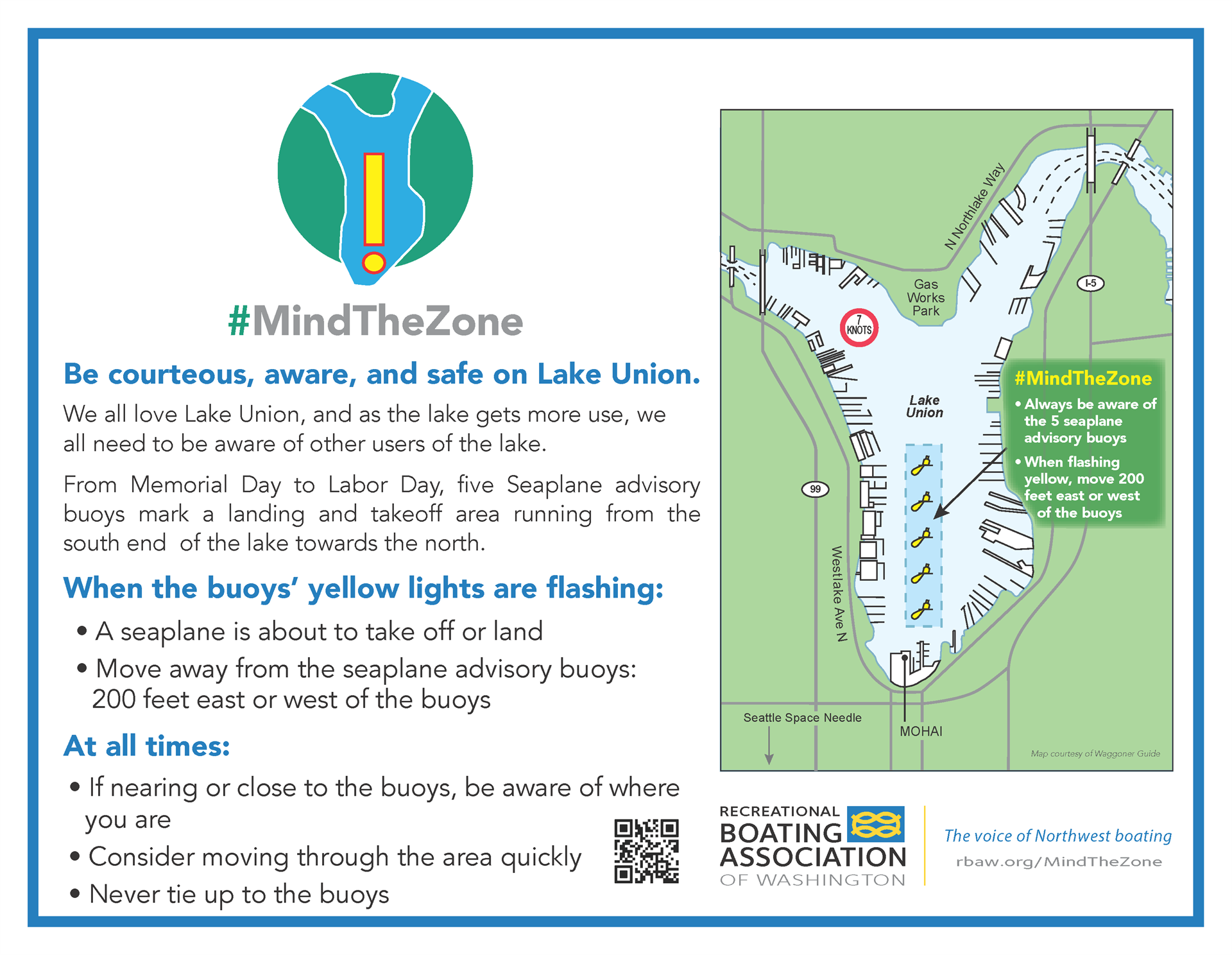
As the sun sets on the summer boating season on Lake Union, it also signifies the end of this summer’s Mind the Zone safety and awareness campaign. Mind The Zone is the annual educational campaign to remind Lake Union paddlers and boaters to be mindful of the seaplane advisory buoys that are installed in the lake each Memorial Day to Labor Day. It was another successful season, with great partnership with the businesses that rent watercraft to both locals and visitors, direct outreach on the lakeshores by our Outreach Coordinators, and lots of sharing of our message through both “real life” things like bus signs, as well as millions of views of the campaign video on YouTube, Instagram, and other digital platforms. If you are a boater in the Seattle area and online . . . well, we are sorry-not-sorry for feeding our video into your feed. Over. And over. ;) We thank not only the partner businesses for their help, but also the State of Washington and the City of Seattle for the funding that supports this campaign, as well as the help in sharing our messages through their various communications tools. And, of course, the RBAW members who lent a hand in some way, and may have shared the message with a marine novice who might not have known about the buoys. Enjoy these sunny near-fall days! |
|
|
|
|
Schedule a FREE Pumpout – only a couple weekends left this season! |
|
|
Reid Harbor Pumpout Station Closure – Mid Oct. through early Dec.
|
|
|
Boaters visiting Stuart Island should be aware that the Reid Harbor pumpout station will be temporarily closed from mid Oct. through early Dec. while Washington State Parks replaces its aging support structures.
The existing pumpout barge in Reid Harbor of Stuart Island is an island float, meaning it has no land connection. The pumpout is currently supported by two (three pile) dolphins at either end. The piles are comprised of creosote, have wear, and do not meet today’s standards. Stuart Island is a remote island that only has boat access.
State Parks included replacing of these creosote dolphins as part of the Reid Harbor Moorage facility replacement for multiple reasons including, a) removing creosote a known toxin from the aquatic environment, b) reduced footprint of the facility by replacing three pile with one on each end, and c) consistency in park infrastructure and cost savings of combining work due to remote setting. A significant portion of the construction costs in the islands are in mobilization fees to get large equipment (barge, crane, pile driving equipment) needed to the project site. Replacing the creosote dolphins for the pumpout in conjunction with the pier project makes business sense for the long-term maintenance and operation of this pumpout facility due to the existing age and type of dolphins.
The San Juan Islands are identified as an area of need in the 2025 Recreational Boating Pumpout Facility Assessment, which found that that the area is underserved with pumpout facilities, recommending six additional pumpouts (p 45, 63). Upkeep of existing aging facilities in this area is a high priority, and this project will ensure that this pumpout location is preserved for sewage disposal for years to come. |
|
|
North Puget Sound, Hope and Skagit Islands Buoy Anchor Replacement – Sept. 14 through Oct. 2
|
|
|
Keeping our mooring buoys safe and reliable is an important part of protecting both boaters and Washington’s marine environment. Washington State Parks is continuing its multi-year effort to replace aging mooring buoy systems, with replacements at Fort Worden, Sequim Bay, Hope Island and Skagit Island from September 14th through October 2nd.
State Parks staff appreciate boaters’ patience with intermittent closures of individual buoys that occur while work is completed.
|
|
|
|
|
|
|
RBAW Annual Meeting - November 21st, 2026 |
|
|
Duwamish Waterway East Deviation – What Boaters Need to Know |
|
|
|
|
The U.S. Coast Guard has approved a temporary bridge operating deviation for the First Avenue South Bridge over the Duwamish Waterway to allow WSDOT crews to perform critical maintenance and repairs.
Effective: July 7, 2026 – January 8, 2027
During this period:
- The bridge will NOT open from 6:00 p.m. to 6:00 a.m. daily while maintenance is underway.
- During normal daytime hours, the bridge will continue to operate under its regular opening schedule.
- There is no alternate water route around the bridge, so vessels requiring an opening should plan their trips during daytime operating hours.
- The bridge provides approximately 32 feet of vertical clearance over the center span (22 feet at the side spans) when closed, allowing many smaller recreational boats to pass without an opening depending on tide and air draft.
For more information contact Garrett Hutton at (206) 440-4626 or garrett.hutton@wsdot.wa.gov.
|
|
|
|
|
New Canadian SRKW Rules – 1000 Meter Distance Required
|
|
|
Now in effect, as of June 1, 2026, Canada has a 1000-meter (just under 1100 yards) distance rule for SRKWs. “Vessels must stay 1,000 meters away from Southern Resident killer whales in southern BC coastal waters between Campbell River and just north of Ucluelet until May 31, 2027.” This new rule replaces the 400-meter rule in these waters that applied to all killer whales, not just SRKW.
The Be Whale Wise site has the complete new set of rules for Canadian waters, although as of this writing they have NOT yet updated their infographic.
|
|
|
|
|
In Washington Waters, the 1000 yd Distance Rule for Southern Resident Killer Whales (SRKW) Remains in Effect. The rules for SRKW (and other marine mammals) remain the same in Washington waters for 2026. As a reminder, boaters must: - Stay 1,000 yards from Southern Resident killer whales.
- Go slow (<7 knots) within ½ mile of Southern Resident killer whales and move away perpendicular to their path if safe to do so.
- Disengage engine(s) if Southern Resident killer whales appear within 400 yards, if safe to do so.
- Stay 200 yards from Bigg’s/Transient killer whales
- Not park in the path within 400 yards of Bigg’s/Transient killer whales
- Stay 200 yards from baleen whales resting or with a calf.
- Stay 100 yards from all other marine mammals (e.g. humpback whales, gray whales, sea lions and seals)
The Washington regulations recognize that there are some areas in Washington waters where navigable channels are narrower than 1,000 yards. If you encounter Southern Resident killer whales and you're between ½ mile and 400 yards away, you should motor slowly (under 7 knots) away and out of their path of travel, if it is safe to do so. If you are closer than 400 yards, you must disengage your engine(s) and wait for the whales to pass if it is safe to do so.
|
|
|
|
|
|
|
|
What is eelgrass?
Eelgrass is a type of seagrass that forms dense underwater meadows, providing habitat for a variety of marine life like Dungeness crabs, salmon, and herring. | |
|
|
Why anchor out of eelgrass?
Anchoring is eelgrass can be risky for boaters because anchors do not hold well in the soft sand and mud where eelgrass grows. Instead of staying put, boats anchored in eelgrass are more likely to drift.
Anchoring in eelgrass can damage the fragile habitat. Boat anchors, chains, and lines can leave scars, creating bare patches that can accumulate over time. These bare patches disrupt the habitat, impacting marine life and potentially leading to erosion.
Voluntary no-anchor zones:
These zones are areas where anchoring is discouraged to protect eelgrass beds. They are marked by informational buoys, navigation apps, and onshore signs.
Best practices for anchoring near eelgrass:
Boaters can help these sensitive eelgrass beds thrive by anchoring in at least 25 feet (8 meters) of water at low tide to avoid the deepest edge of eelgrass meadows. If possible, use a mooring buoy. |
|
|
|
|
RBAW Legislative Committee Meeting
Sept 15th, 2026 | 5:00 PM - via Zoom RBAW Governance Committee Meeting
Sept 16th, 2026 | 4:00 PM - via Zoom
RBAW Executive Committee Meeting
Sept 21st, 2026 | 4:00 PM - via Zoom
RBAW Board of Directors Meeting
Oct 1st, 2026 | 6:00PM - via Zoom AND In-Person at SYC
RBAW Finance Committee Meeting
Oct 13th, 2026 | 9:30 AM - via Zoom
RBAW Membership Committee Meeting
Oct 14th, 2026 | 12:00 PM - via Zoom
RBAW Legislative Committee Meeting
Oct 20th, 2026 | 5:00 PM - via Zoom
RBAW Governance Committee Meeting
Oct 21st, 2026 | 4:00 PM - via Zoom RBAW Executive Committee Meeting
Oct 26th, 2026 | 4:00 PM - via Zoom
RBAW Annual Membership Meeting
Nov 21st, 2026 | 9:00AM - In-Person at Edmonds Yacht Club |
|
|
|
|
Contributing Business Memberships |
|
|
|
|
|
|
|
|
Follow us on social media and join our boating community!
|
|
|
|
|
|
|
|




.png)